• Skip to content

Main menu NEW

  • home
  • selected works
  • archive
  • bio
  • contact
  • Back
  • Withheld
  • Together and alone
  • Masai sheeps
  • Circus
  • Fight club
  • My Streets
  • Back
  • street
  • storytelling
  • people
ONDŘEJ BLAHO

Main menu NEW

  • home
  • selected works
    • Withheld
    • Together and alone
    • Masai sheeps
    • Circus
    • Fight club
    • My Streets
  • archive
    • street
    • storytelling
    • people
  • bio
  • contact

The Circus

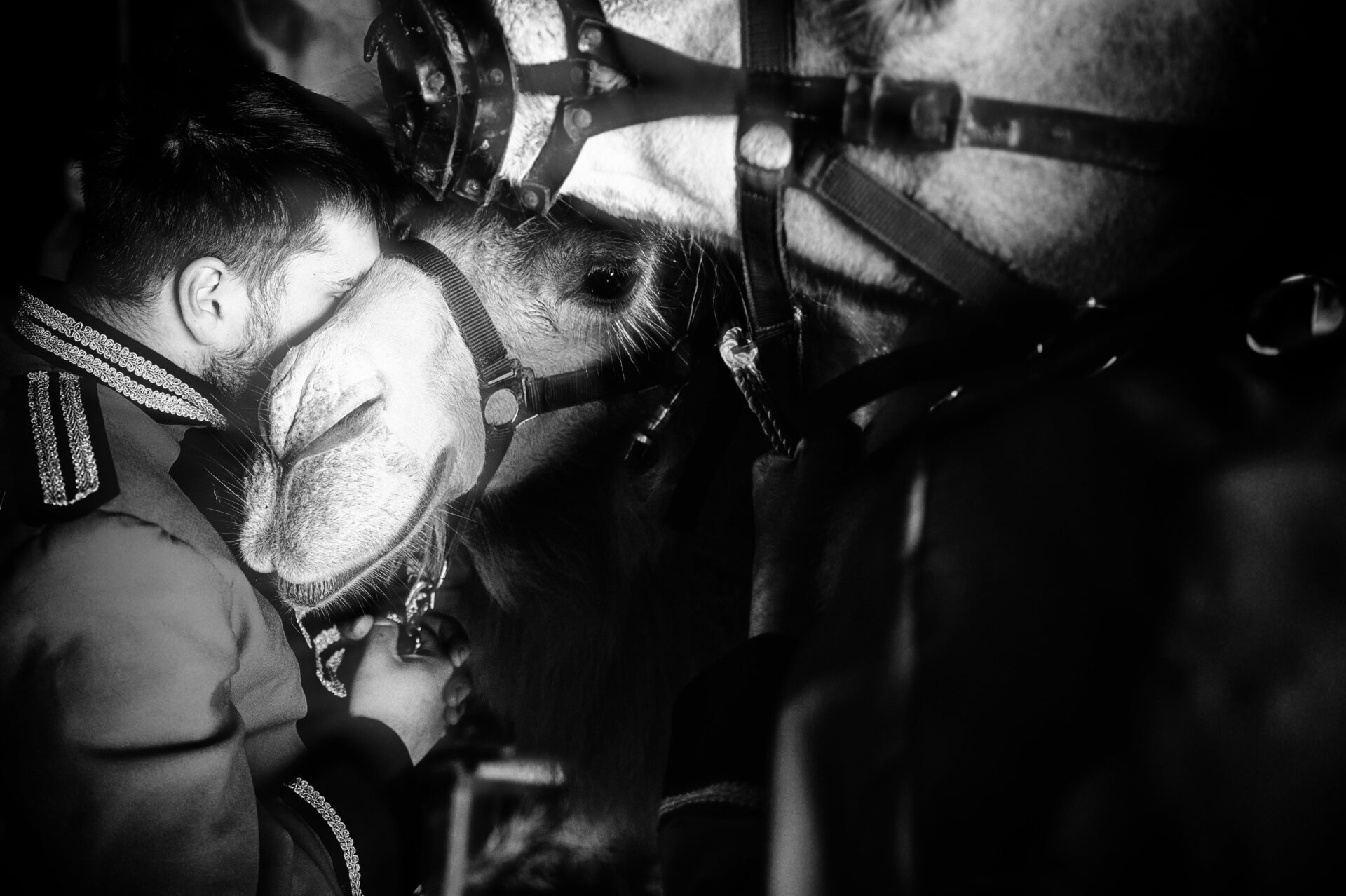
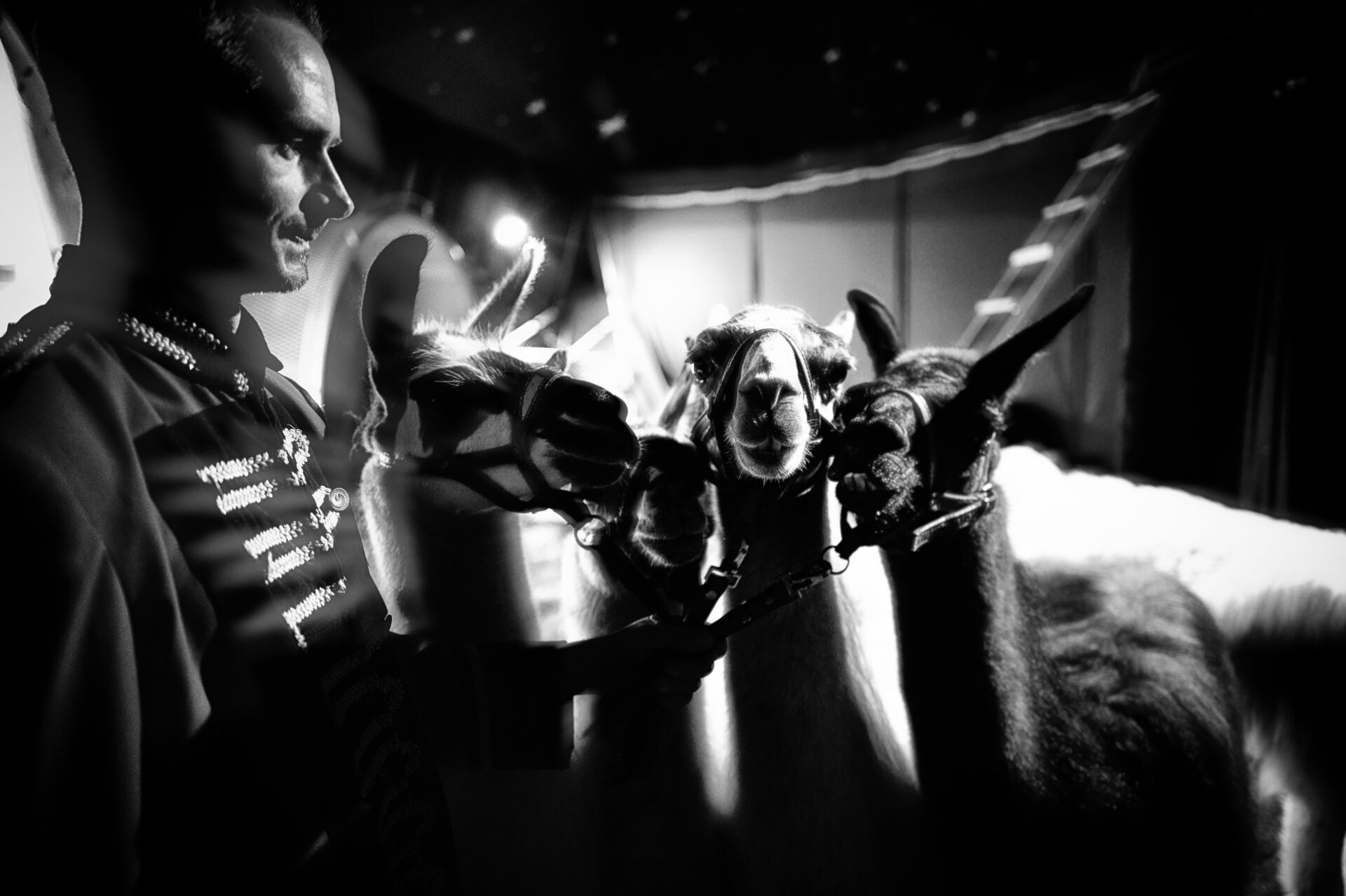
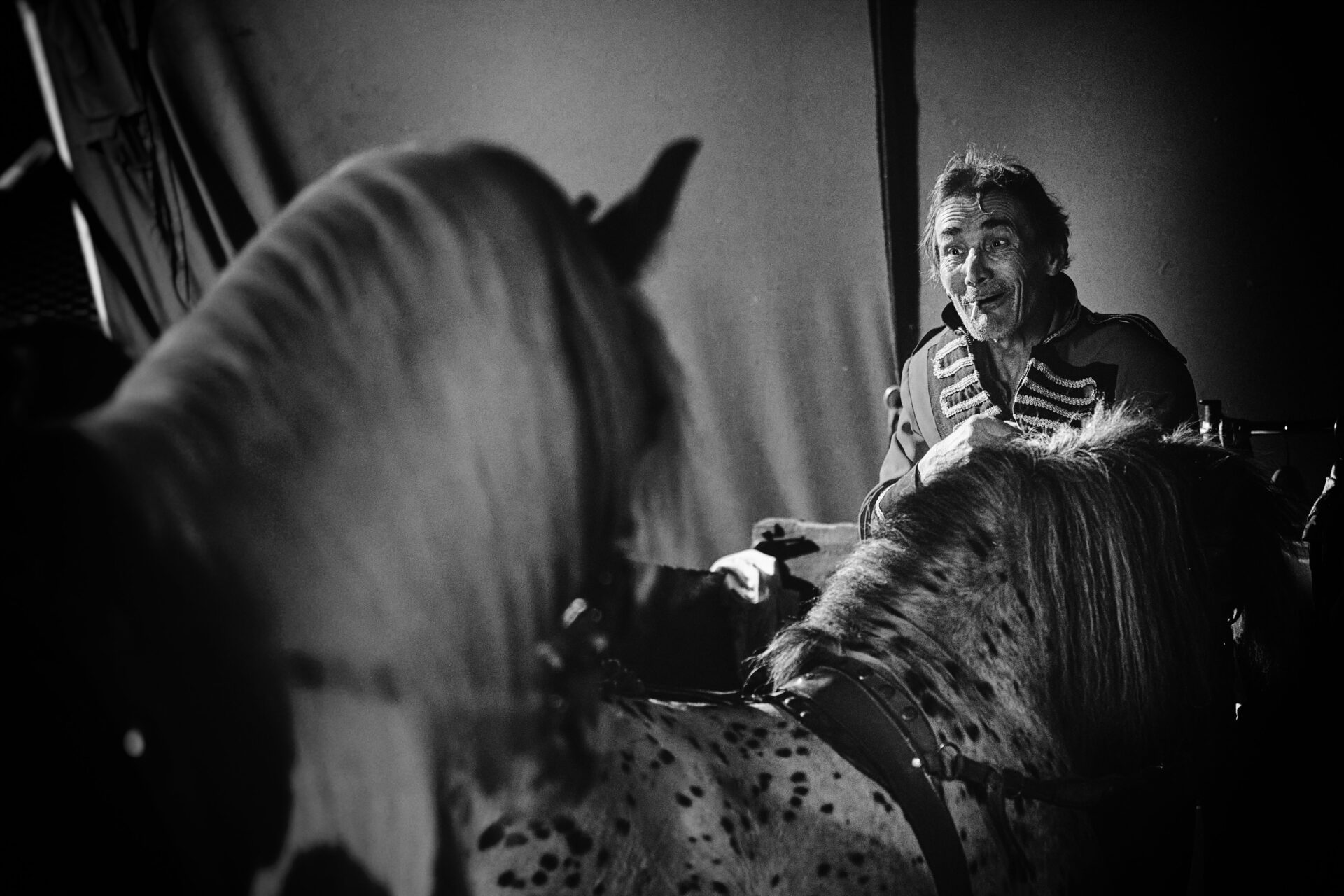
Amedeo Folco. He clearly loves attention. Southern blood runs through his veins, and with a cigarette in his mouth, he looks like the archetype of a worldly artist. He savors every drag of his cigarette, but at the same time, he holds a carrot in his hand for his beloved stallions.
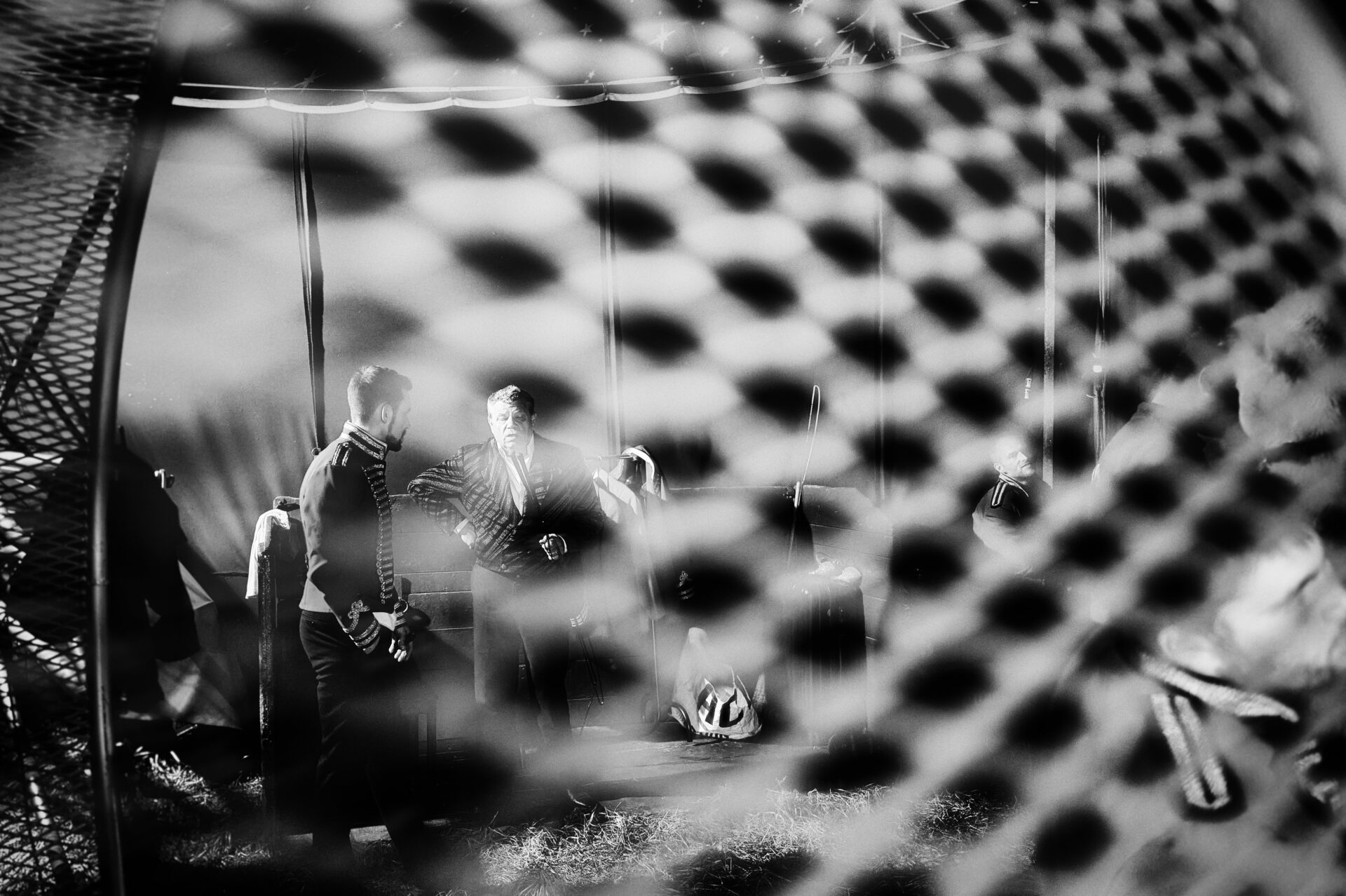
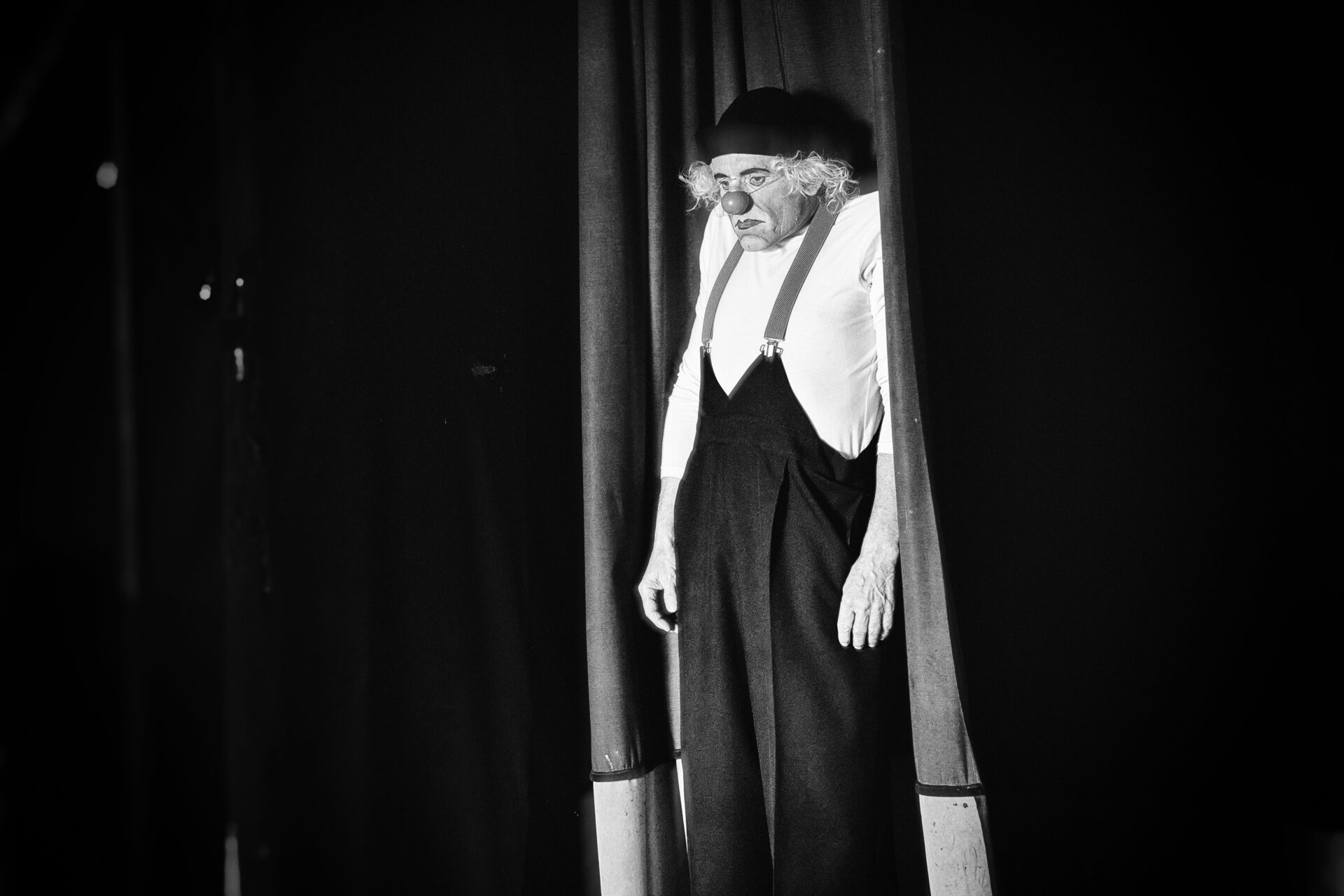
Mr. Chap warms up before his first performance. At first, I think he's just a clown, joking around and making fun of things, but during the evening I see how physically demanding his performances are and why, after each act, he diligently stretches in every conceivable angle to ensure he is completely satisfied with his next performance in front of hundreds of expectant spectators. Responsibility, yes, that's what radiates from him even more than his sense of humor. It's up to him today to make people laugh, and he takes it damn seriously.
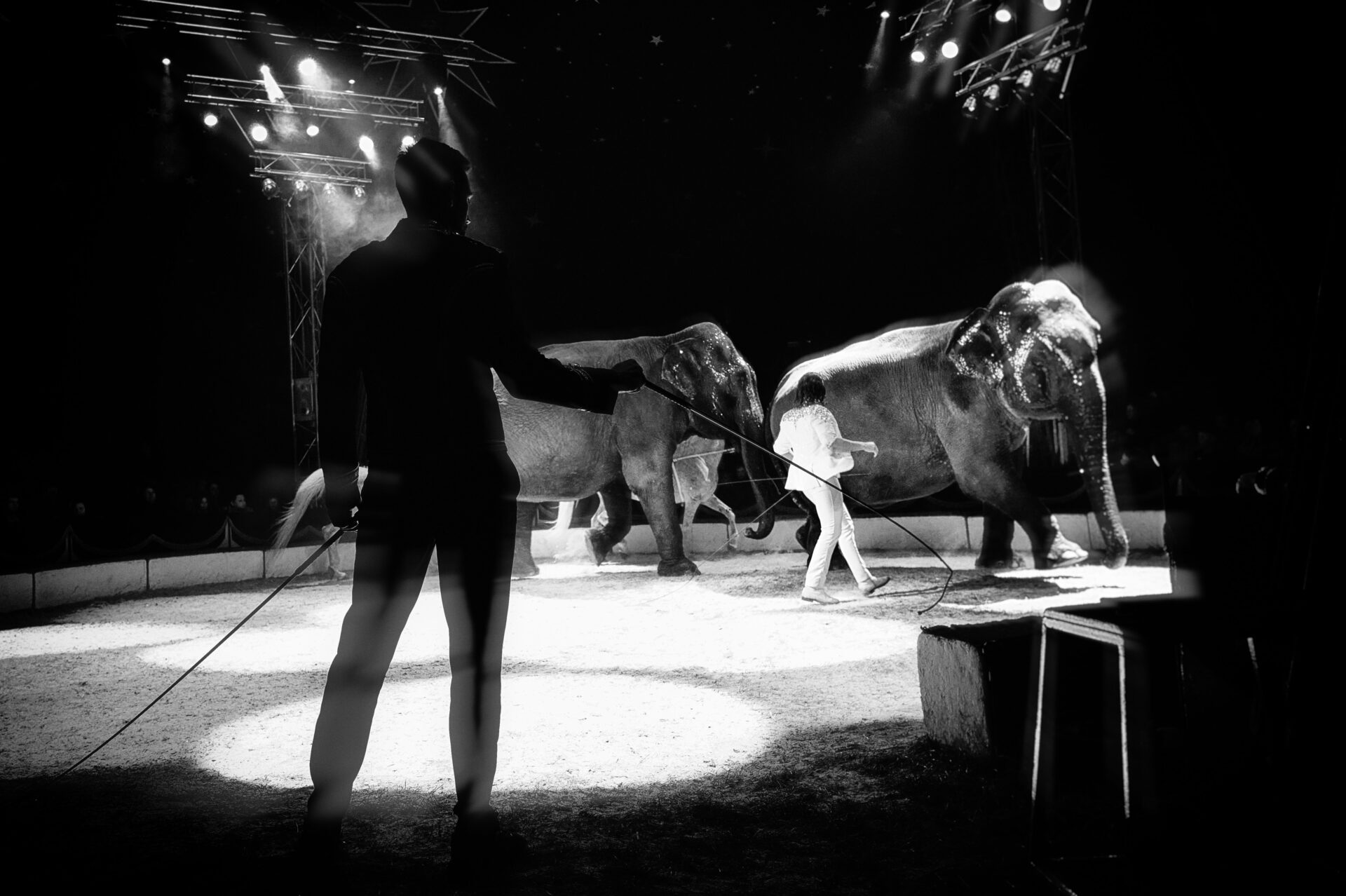
The love for animals is touching. Each one has a name, each one has its own story.
"When Míša (the bear) is in a good mood, a biscuit is enough, but when he's having a bad day, he needs a Tatranka. But not too many, or he'll get fat," Lenka explains to me. "The bear is really dangerous. When he comes, hide, and if there's a problem, climb onto the wheel of death," Jay urges me later. I don't know, he looks like a nice furry creature on his scooter, but when he entered the backstage area with Herr Direktor a few moments later, it was as if the ground had disappeared beneath everyone's feet, and I was standing close enough to take pictures and far enough away to take to my heels.
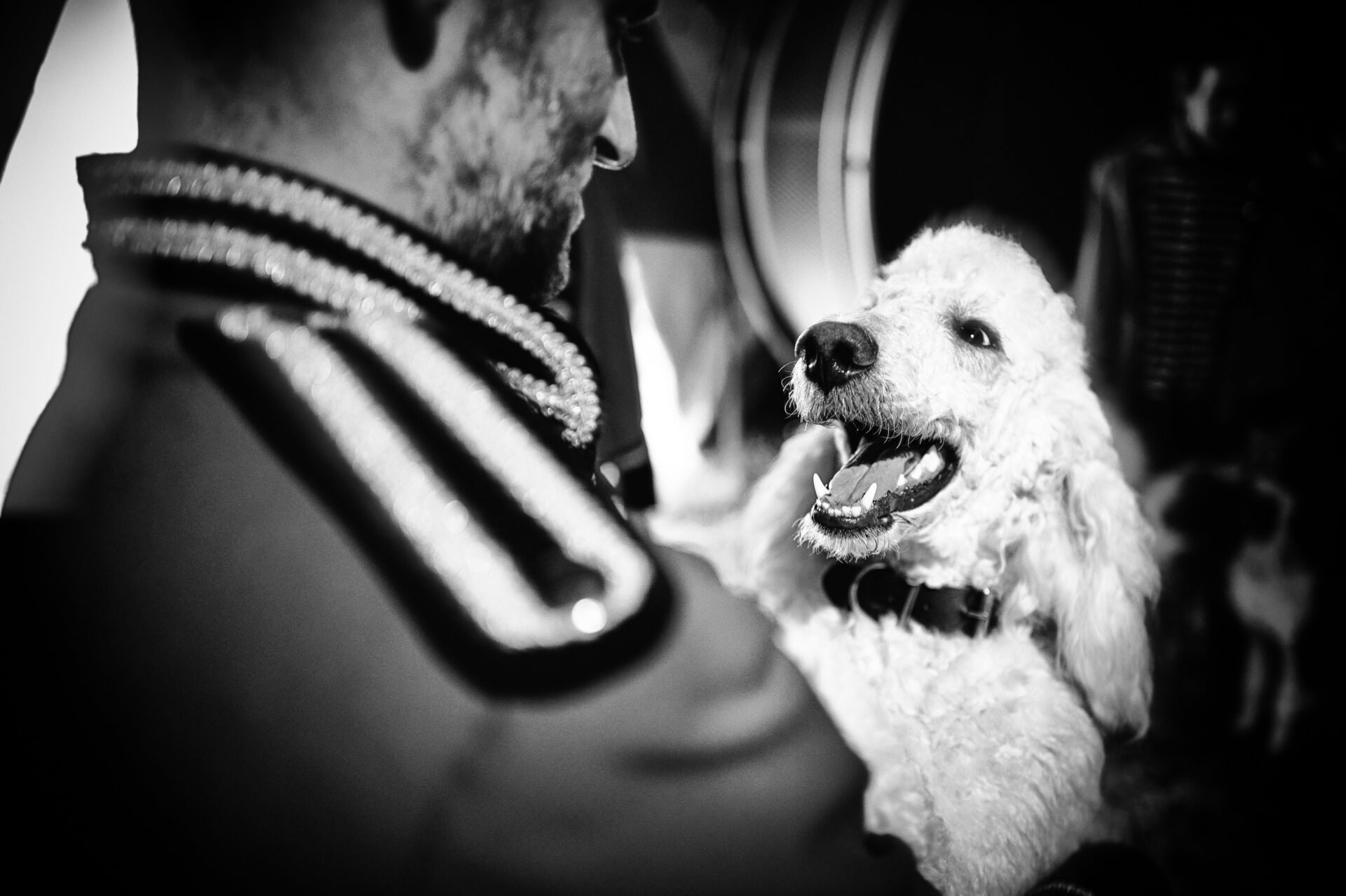
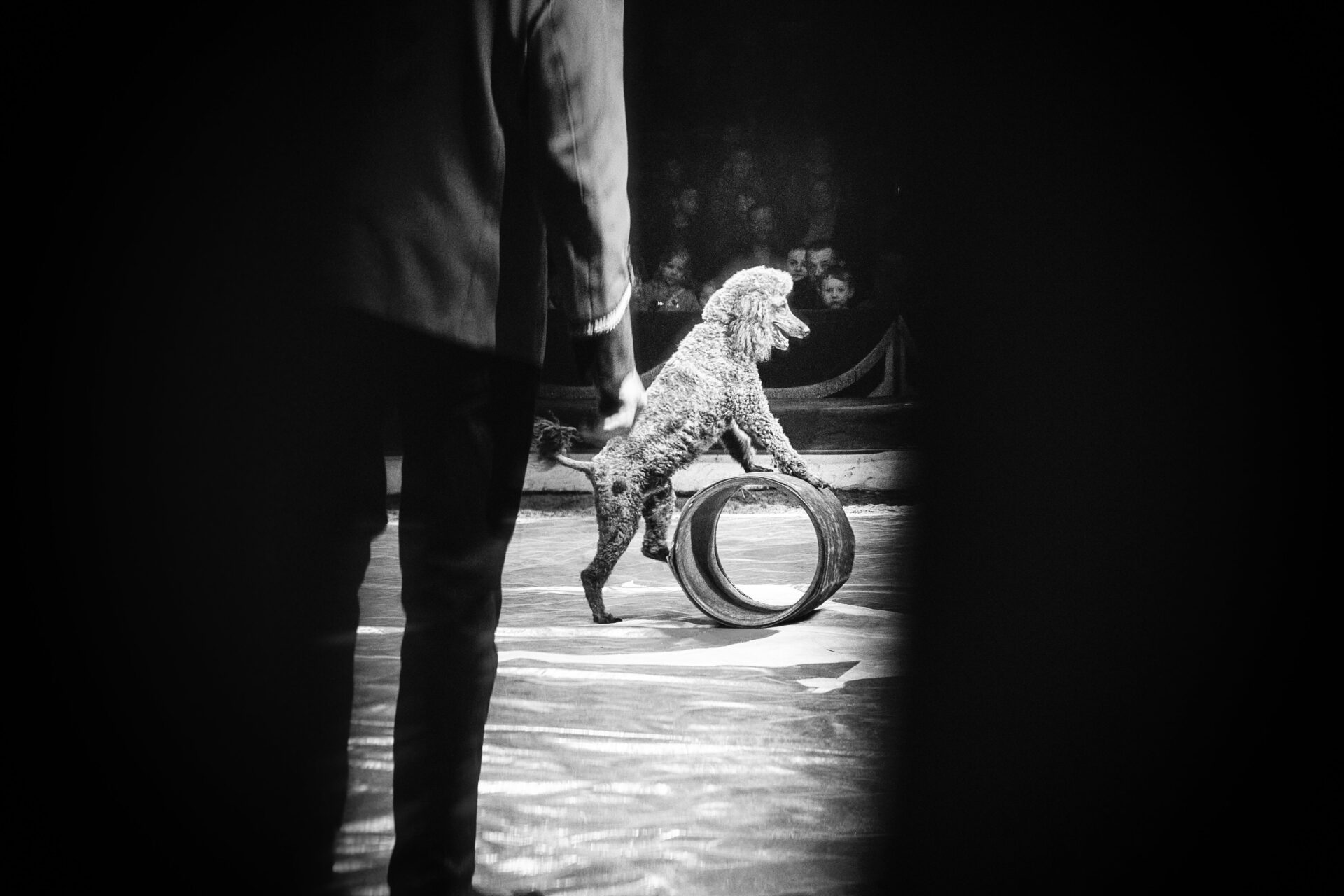
A show with poodles, they arrive from the menagerie on a cart, there are five, six, seven of them? I don't know myself. The guys backstage cuddle them like little children.
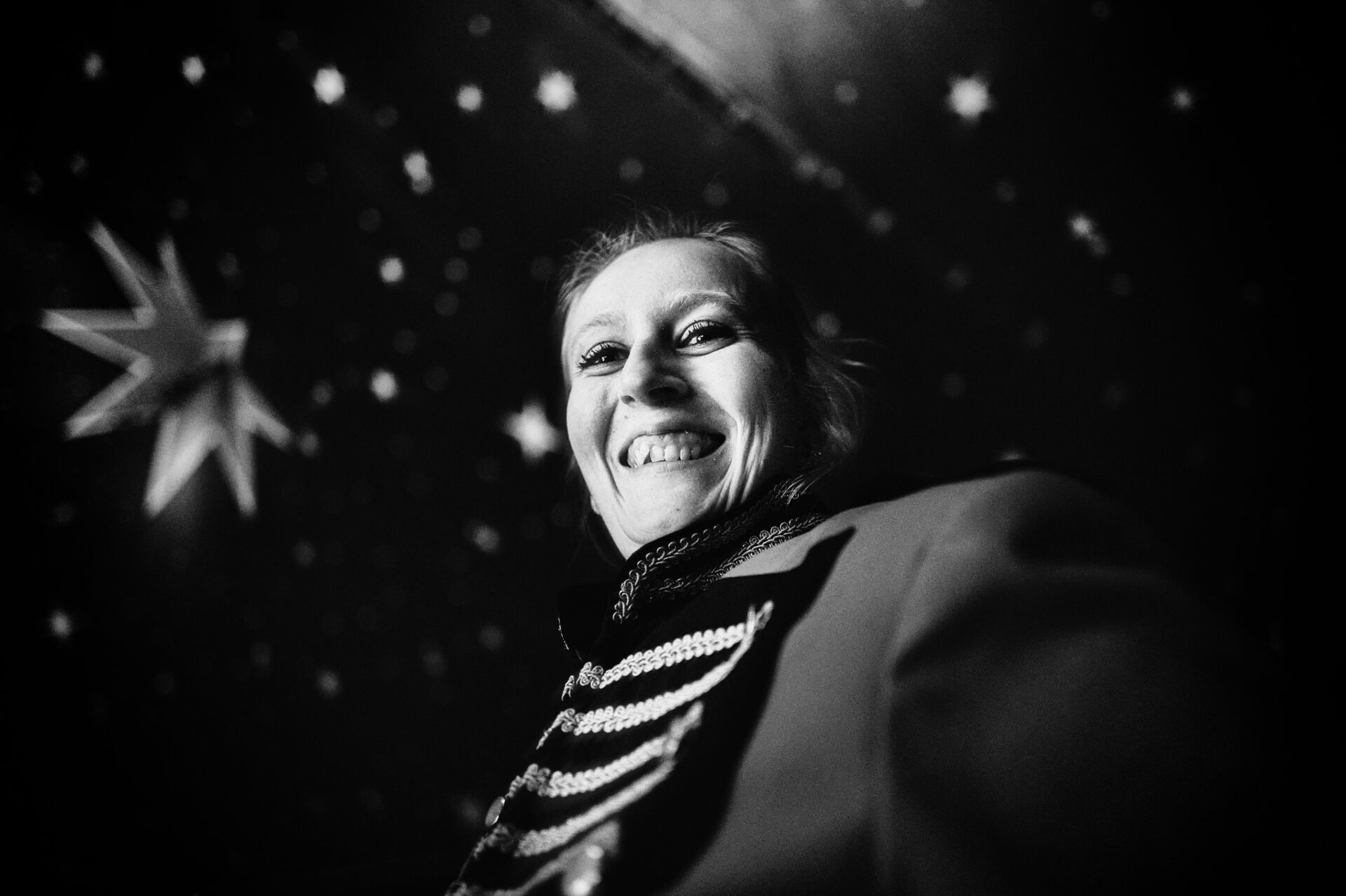
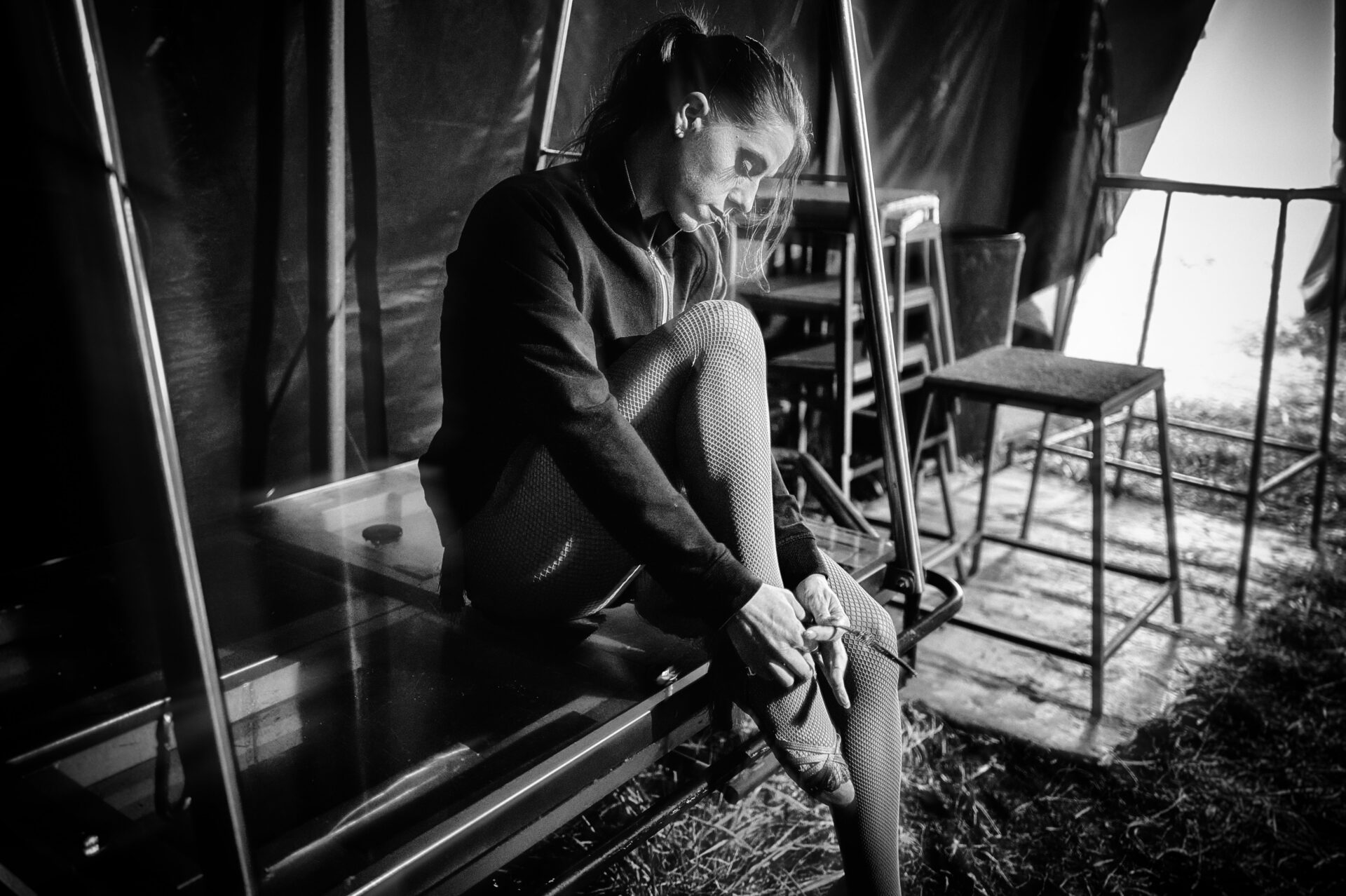
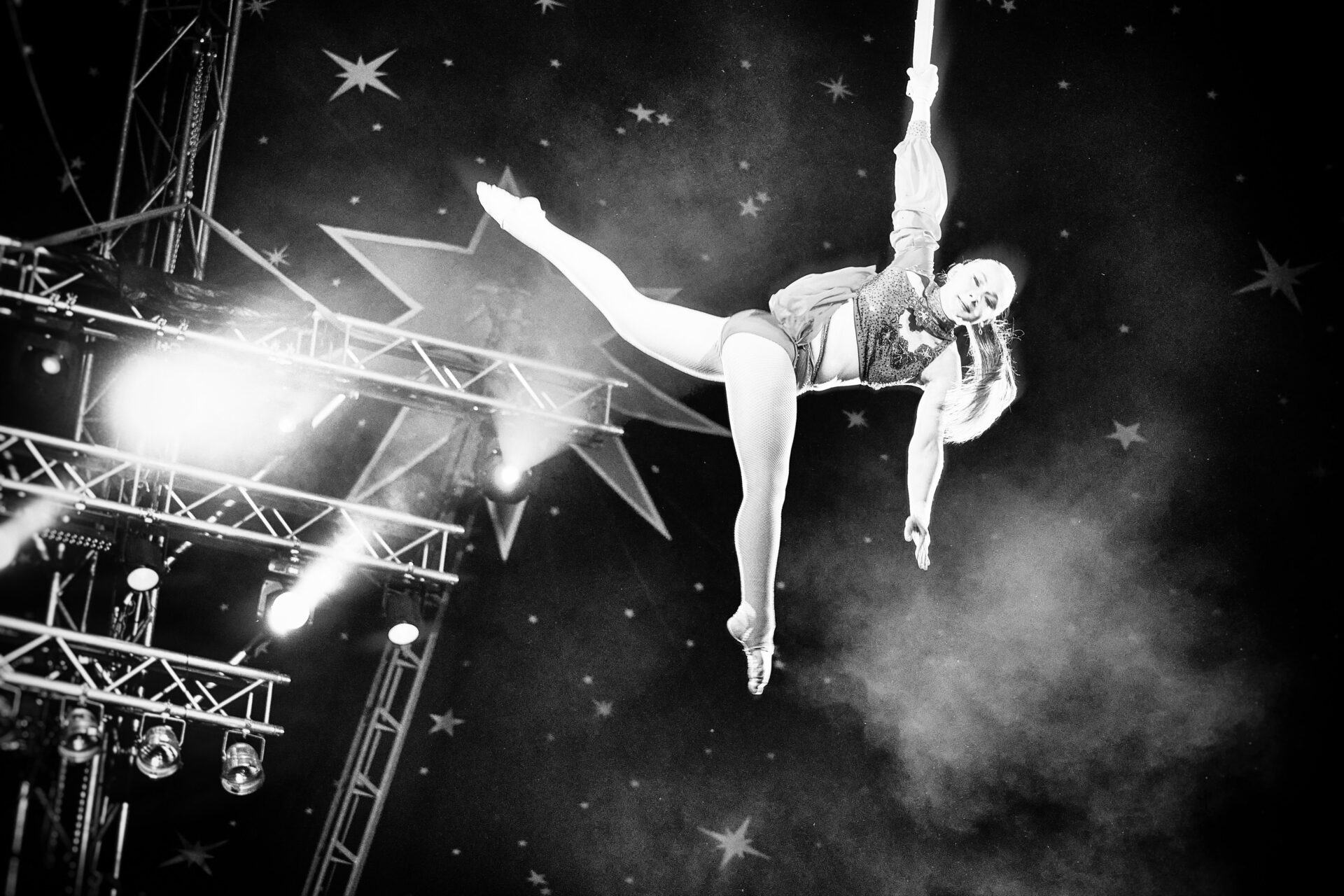
Anastasiia Mudrak from Kiev, aerial trapeze and other breathtaking artistic performances. Here in the circus, I see something I definitely did not expect to find here—humility. Everyone really has to be useful, everyone lends a hand. And so, when Anastasiia isn't carefully checking each link of the rope, something that in a few moments will separate her from a potential fall from several meters, she sells refreshments during the intermission, just like the other artists.
He smokes a lot, spits frequently, and tells wonderful stories. He tells us the names of the animals, how old they are, and what problems they have. This guy has so many funny stories, but I have to hurry backstage from the menagerie because the show is about to start.
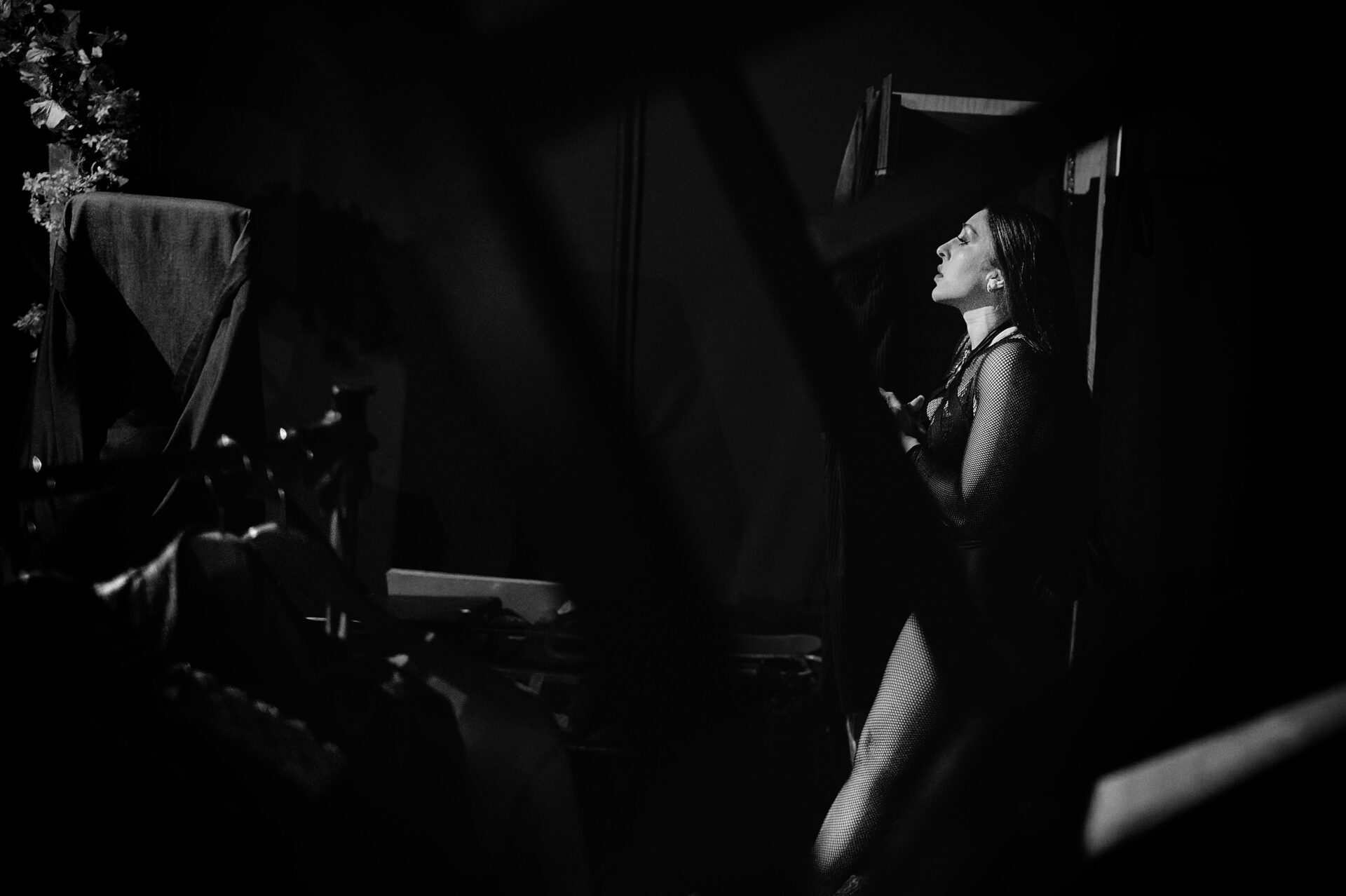
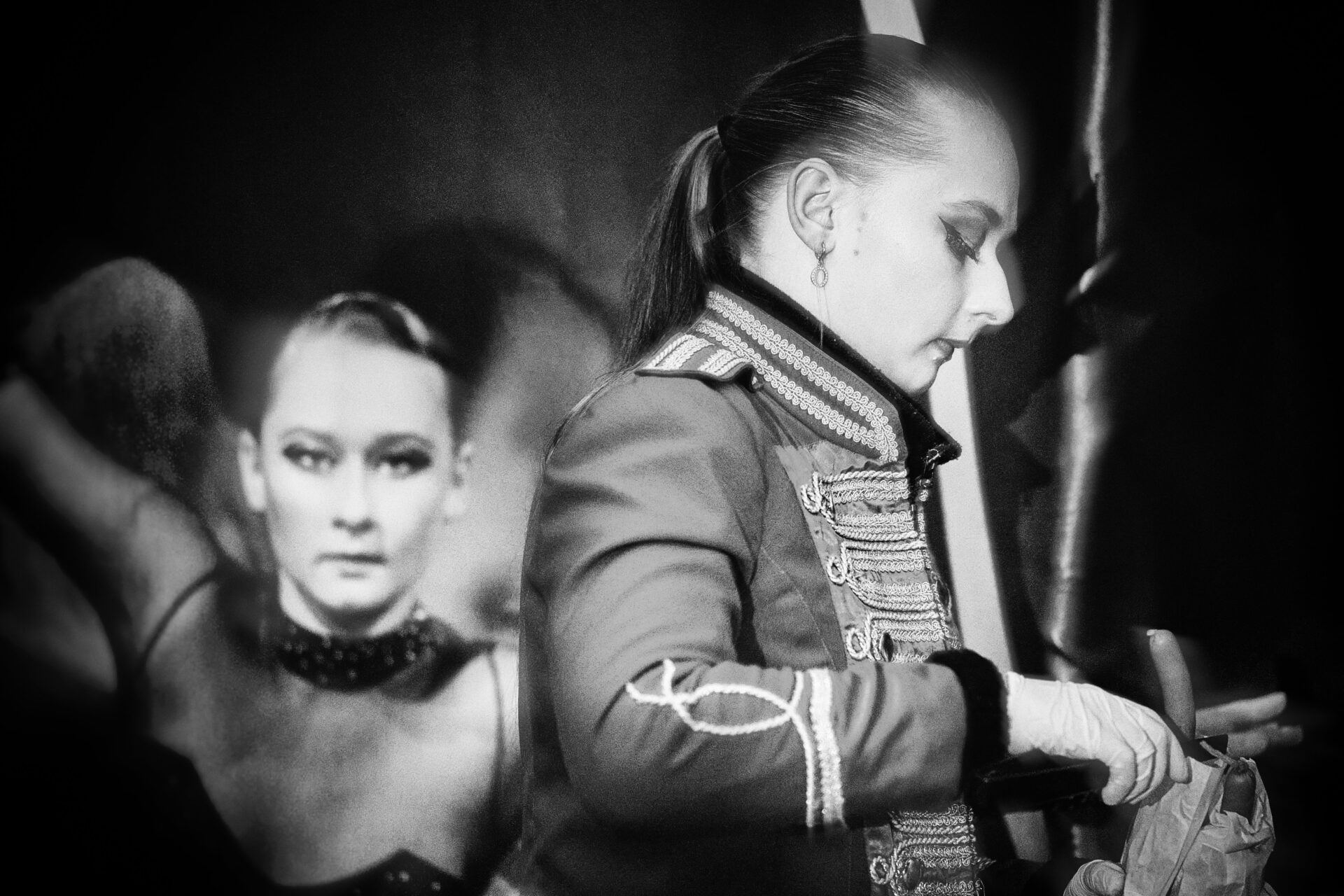
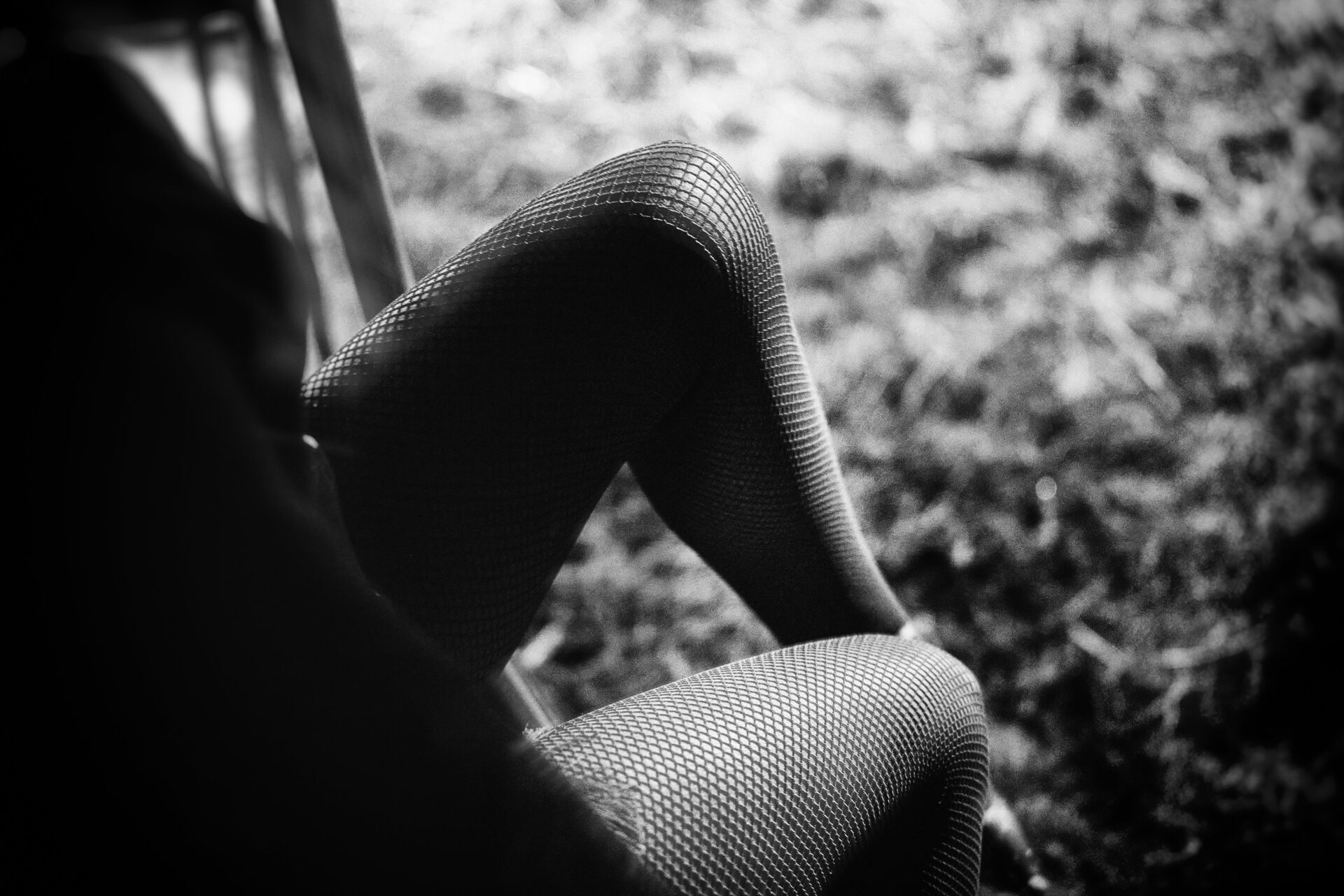
Alexandra Rizaeva, a Russian woman with profound beauty and incredible concentration.
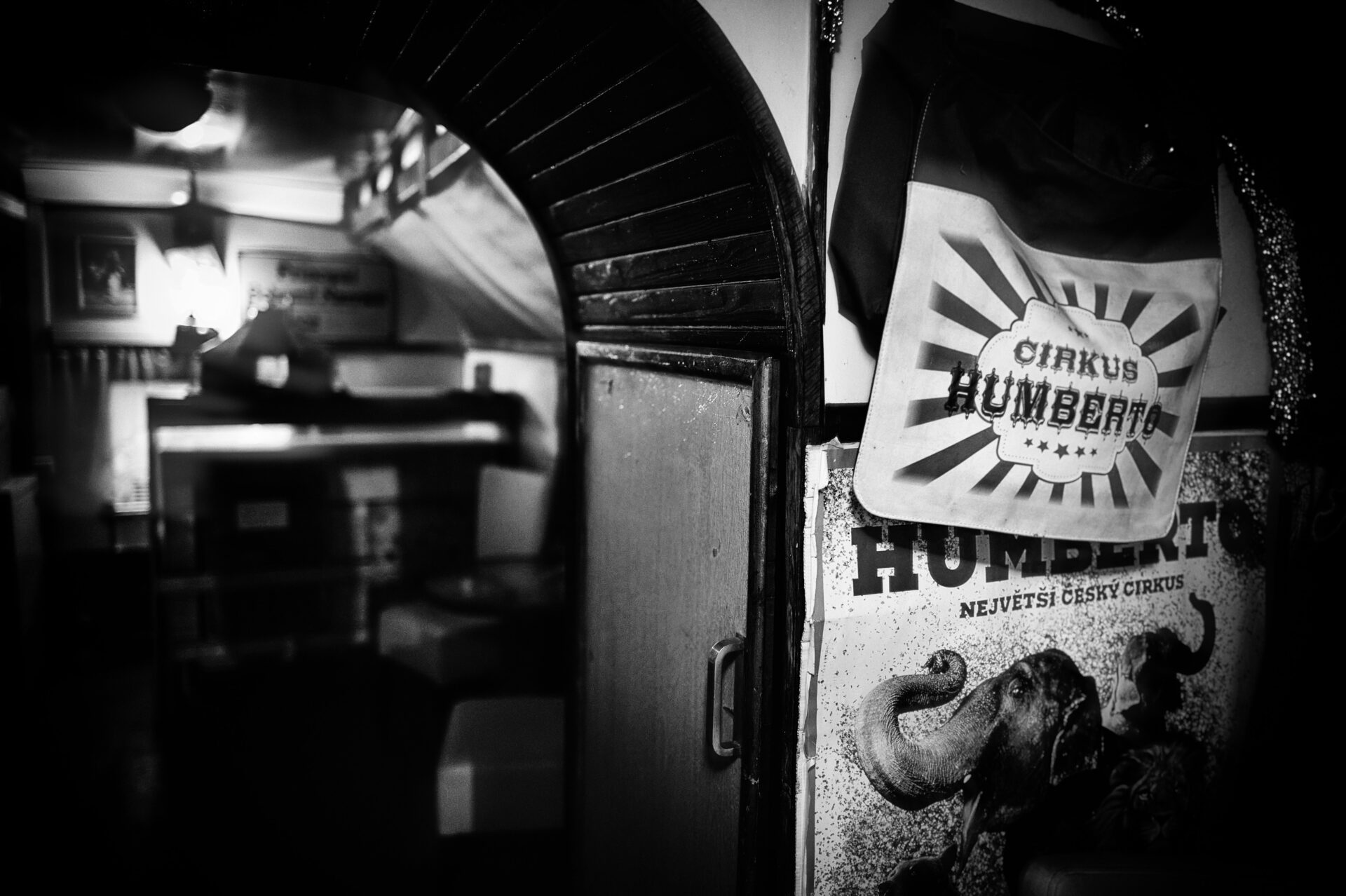
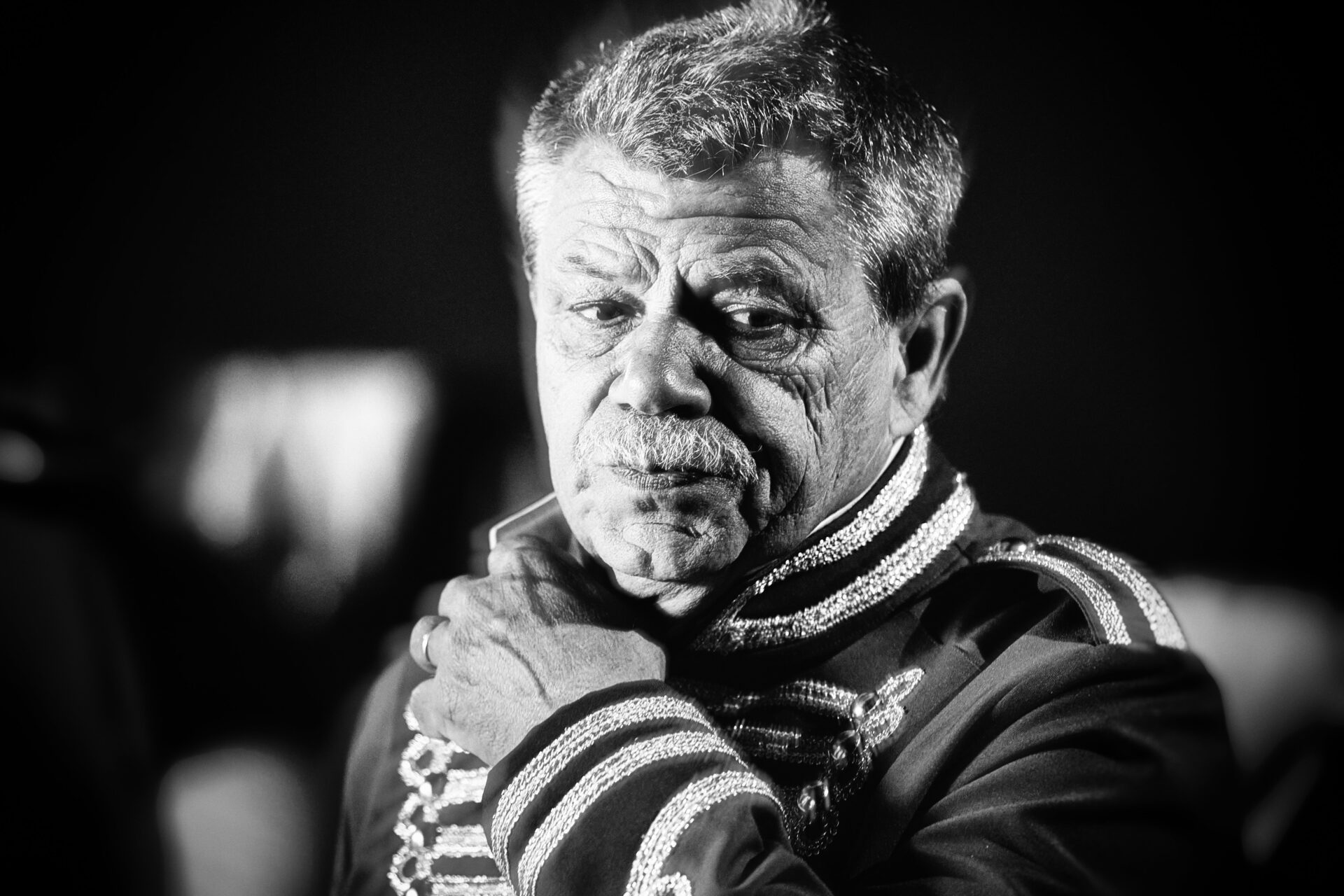
Herr Direktor, as Chap Hynka Navrátil, the director and owner of Circus Humberto, refers to him. He seems reserved, not even exchanging a word with me, but during the evening I see how carefully he attends to each artist and meticulously supervises everything from a distance.
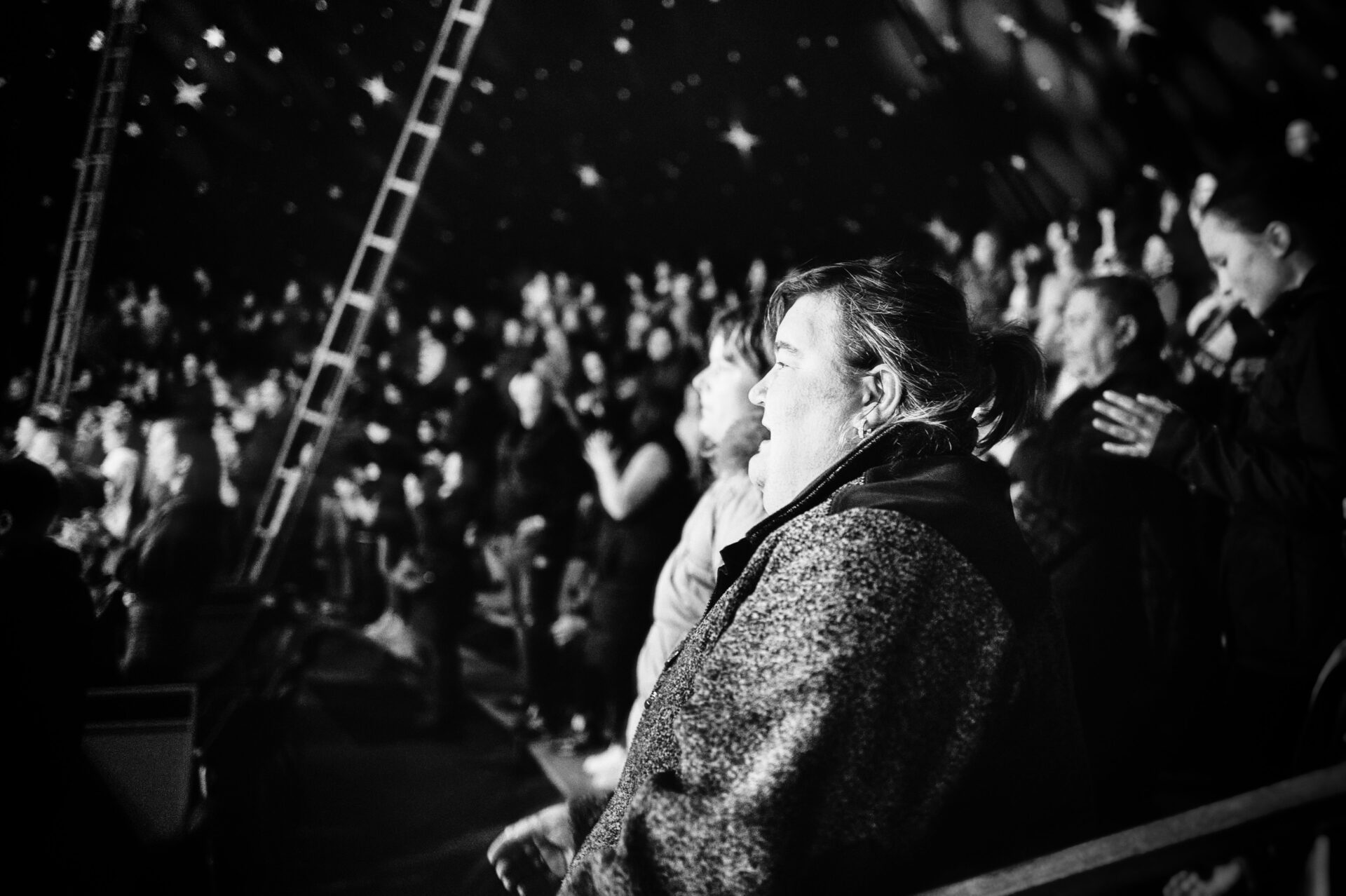
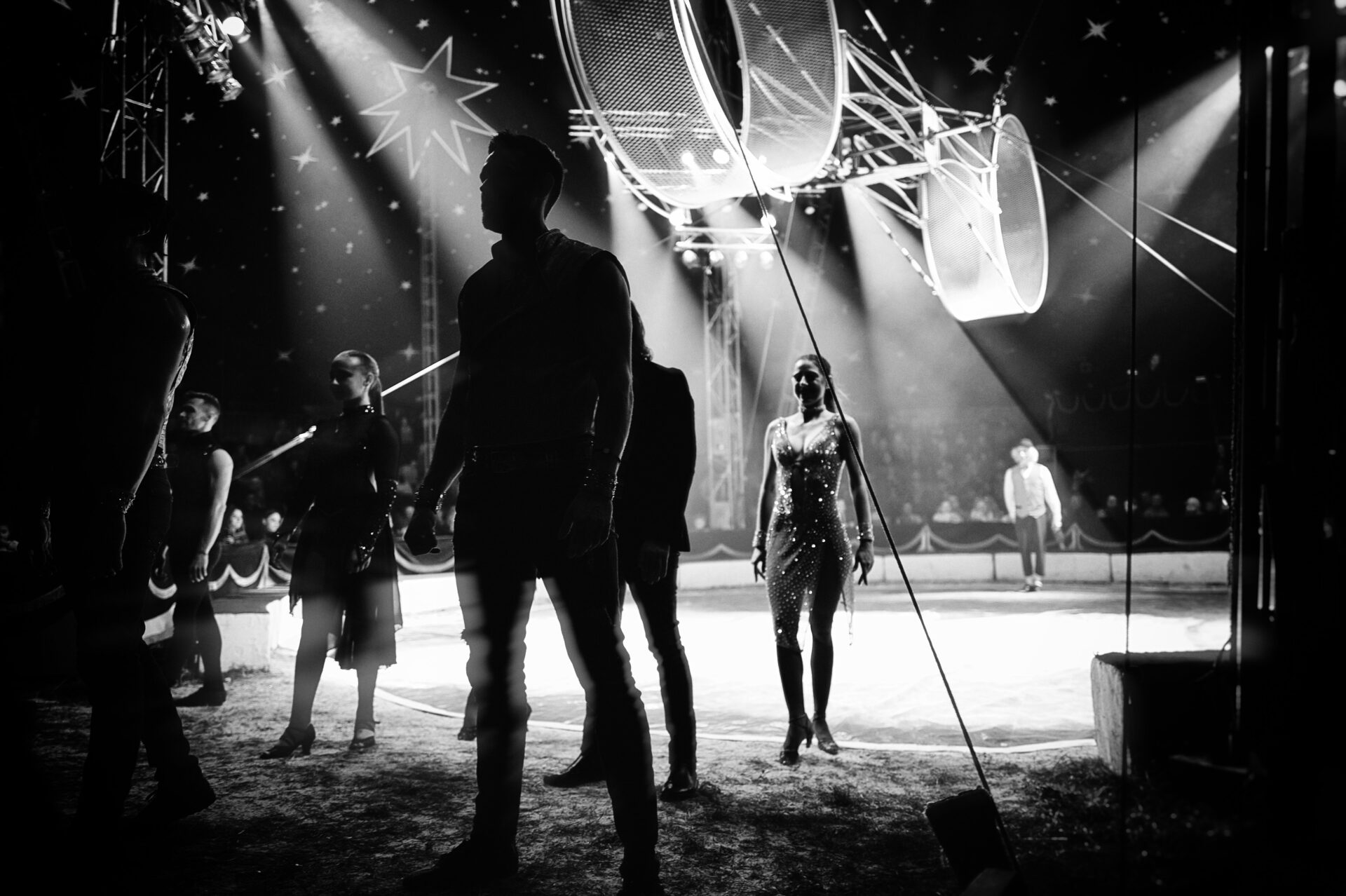
The performance ends. Applause and ovations, cheering children, cones of harsh light, an electrifying atmosphere, and performers slowly and gracefully clearing the stage...
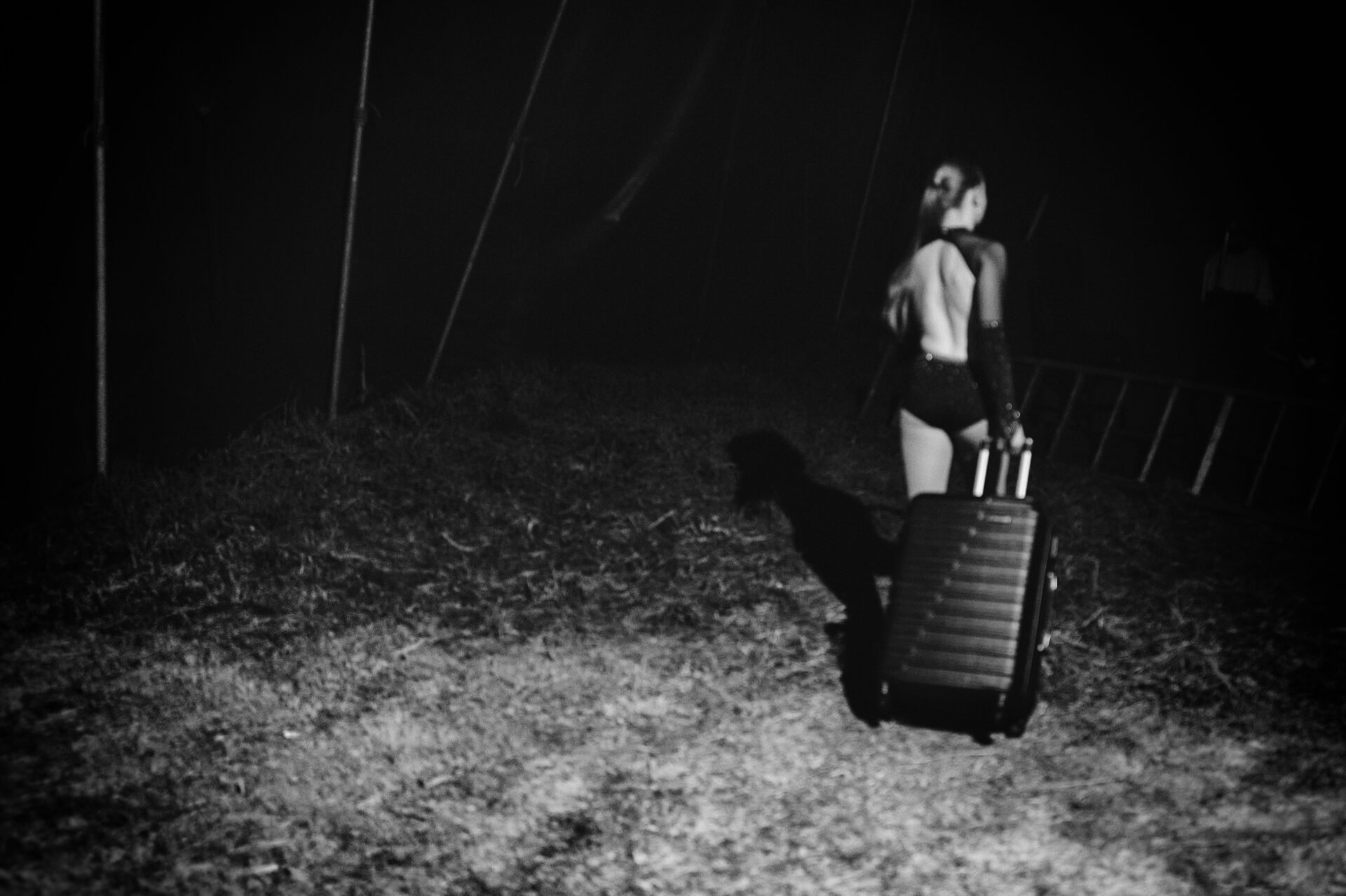
The last performers pack up their equipment with reverence and, if they have no further duties after the performance, head for their trailers. That's it for today. But tomorrow, more spectators will arrive, full of anticipation, and then again and again and again. I wonder when and how this life ends, how and whether it is even possible to escape it. What will replace this atmosphere in their lives without leaving an unpleasant void? Later, I realize that there is probably no such thing.

Year: 2023–2024
Status: Completed
Approach: Long-term documentary / Humanist photography
Themes: Family, tradition, nomadic life, cultural heritage, performance, backstage life and belonging

The Humberto Circus was originally just a work of fiction. The famous novel was written in 1941, during the difficult times of the German Protectorate, with the aim of boosting national pride, and quickly became a cult classic. Ten years later, in 1951, an existing circus was given the name Humberto, borrowed from Bass’s novel. Although the war was over, the country found itself in the grip of harsh Stalinism and political trials. The circus thus once again became a symbol of the struggle to preserve national identity despite the regime.

After the Velvet Revolution, this state-owned enterprise was privatized and passed into the hands of the Navrátil family. They have been associated with the nomadic life and circus arts since the early 18th century and have passed their secrets down from generation to generation in the ring.

Family is the essence of this circus. The core of the enterprise is made up of the Navrátil family, which accounts for about half of the staff. The other half is made up of artists from all over the world: performers from Ukraine and Russia, as well as Italy, Spain, France, and South America, perform side by side.

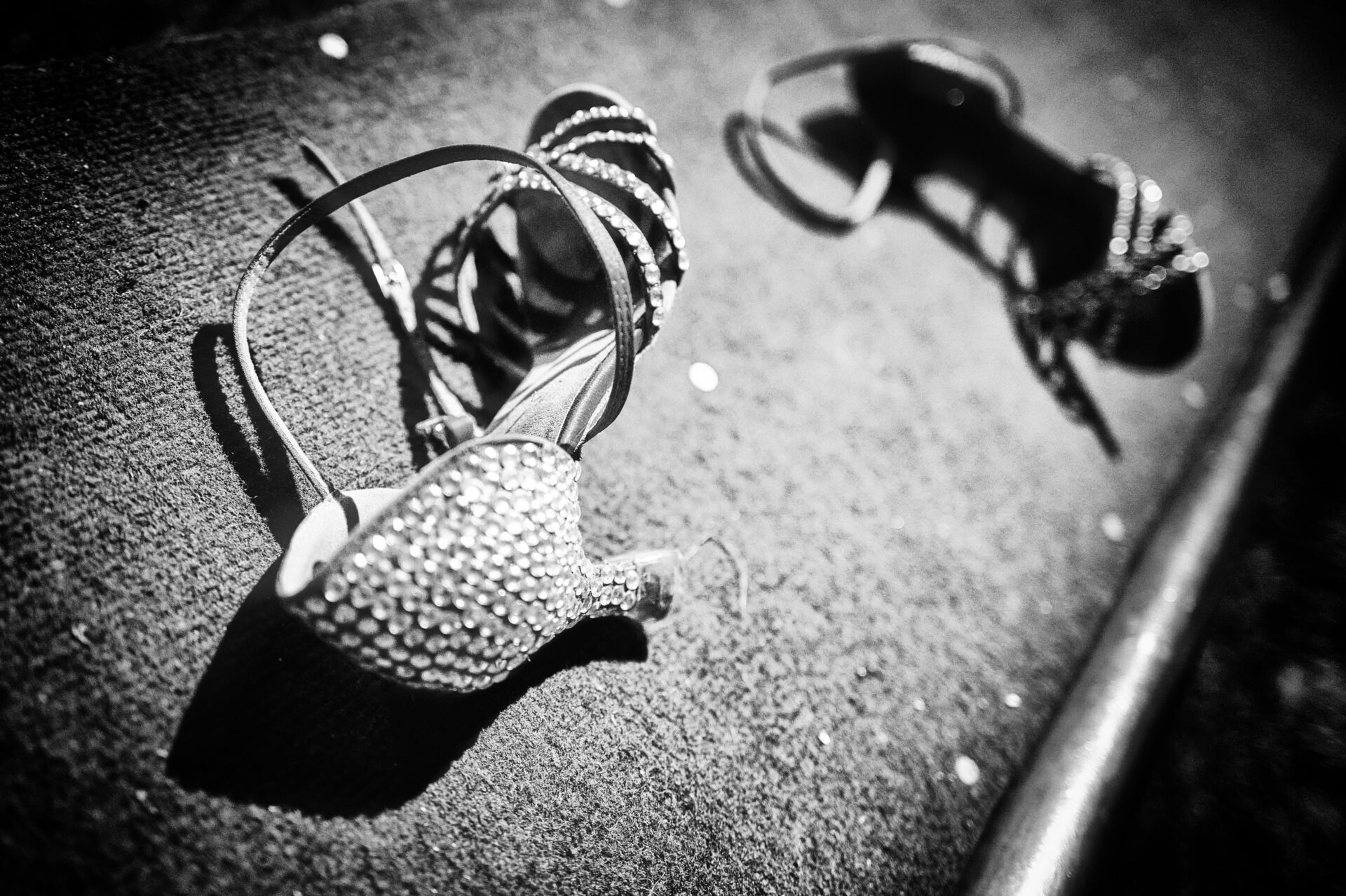
This photographic series, which took two and a half years to make, captures the raw poetry of the old European circus tradition. Although it still persists, it is slowly disappearing under the pressure of modern shows. You will see spotlights, glittering costumes, and cheering audiences, but also backstage scenes full of sweat, mud, tears, and the need for absolute concentration.

Posted in Portfolio

Post navigation

Previous
Next

© 2026 MINIMAL

Follow us

Like us on FacebookFollow us on Instagram
x